久保多町の屋台

制作:文化9(1812)年
制作者:工匠:板垣伊兵衛
同源左衛門
(見送り)板垣伊兵衛
白木造りの清らかな神社を思い描いてく造られたとされる。丸彫彫刻や柱の模様、欄間などの彫刻に力点を置いて制作されたとされる。一階は柱六本を立て、前方を囃子台、後方を楽屋台とした二間造りになっている。
Year of Construction: 1812 (Bunka 9)
Craftsmen: Itagaki Ihei; Genzaemon
Rear Display (miokuri): Itagaki Ihei
This float is said to have been designed to evoke the image of a pure, unpainted wooden shrine. Particular emphasis was placed on detailed carvings, including three-dimensional sculptures, pillar decorations, and carved transoms.
The first level is constructed with six pillars in a two-bay structure, with the front serving as a platform for musicians and the rear as a backstage area.
久保多町の乗せ物
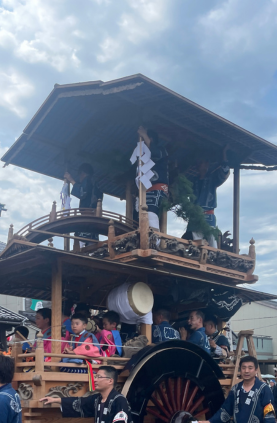
「摂津の住吉神社の景」を鳥居と太鼓橋と老松で現す。松は後方になびかせる。
悪魔祓いと招福と延命、和平のを祈願を住吉神社の神徳に期待し、久保多町屋台の乗せ物となっている。
The Scene of Sumiyoshi Shrine in Settsu
This scene represents Sumiyoshi Shrine in Settsu through a torii gate, a drum bridge, and an aged pine tree, with the pine branches flowing toward the rear.
The motif expresses prayers for protection from evil, the bringing of good fortune, longevity, and peace, reflecting the divine virtues associated with Sumiyoshi Shrine. For this reason, it was chosen as the mounted feature of the Kubota-machi float.
久保多町の法被

久保多町は街の東側に位置しており、それを意味する「東久」が町印となっている。法被の大紋にも町印を付している。地模様には、地元ではつるべ車やはね車などと呼ぶ源氏車を縦縞とともに配する。裾柄は「久」を崩して角文字で大きく配したデザインとなっている。
Kubota-machi is located on the eastern side of the town, and the characters “Tōkyū” (東久), reflecting this, serve as the district emblem. This emblem is also used as the main crest on the happi coats.
The base pattern combines vertical stripes with the Genji-guruma (carriage wheel motif), locally referred to as tsurube-guruma or hane-guruma.
The hem design features a stylized, square-shaped rendering of the character “Kyū” (久), arranged prominently.
屋台と乗せ物一覧に戻る

